The United Kingdom is one of Turkey's largest export markets: textiles and apparel, furniture, food, automotive parts, machinery, building materials and e-commerce goods leave Turkey for the UK every week. Since Brexit, this flow runs under a two-stage customs regime that requires transit through the EU and a separate import declaration in the UK. This guide walks SMEs, e-commerce sellers and first-time exporters through the whole process of shipping commercial freight and groupage (part-load) consignments from Turkey to the UK.
What Is Groupage (Part-Load) Freight?
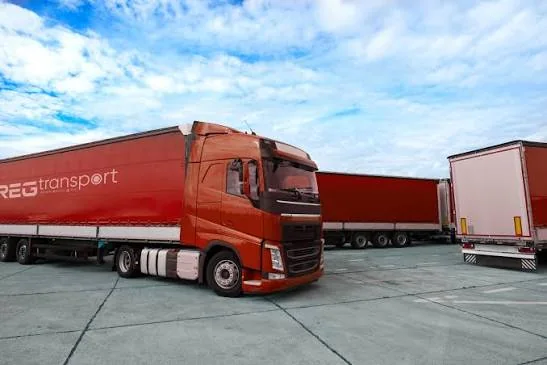
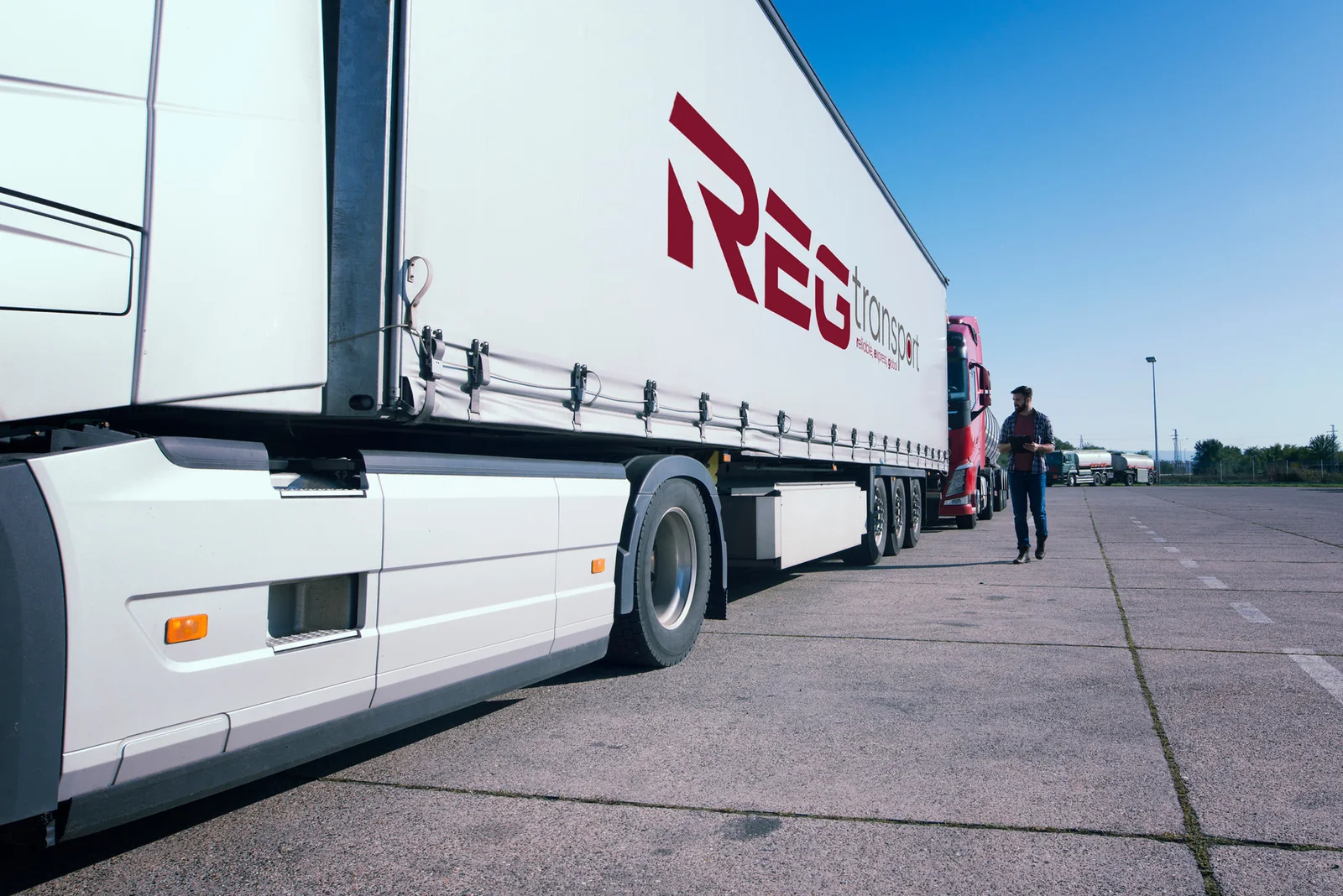
In groupage, the capacity of one truck is shared between several shippers whose goods travel on the same route. For a few pallets, a few boxes or loads of 2-10 m³, you pay only for the space you occupy (per pallet, m³ or weight) instead of hiring a full vehicle. REG Transport runs regular weekly groupage departures on the Turkey–UK route; your cargo is consolidated at our Istanbul or Gaziantep warehouse and distributed via our London depot.
| Groupage | Dedicated vehicle (FTL) | |
|---|---|---|
| Suitable load | 1-15 pallets / 1-40 m³ | Full truck (33 pallets / 90 m³) |
| Pricing | Per pallet, m³ or kg | Fixed rate per vehicle |
| Transit time | 6-10 days | 4-6 days |
| Departure frequency | Weekly, scheduled | On demand |
| Handling | Consolidation at the warehouse | Direct loading |
The Turkish Side: Export Declaration and Documents
An export declaration is opened in Turkey for every commercial shipment. The documents required:
- Commercial invoice: buyer and seller details, product description, HS code, quantity, unit price, total value and delivery terms (Incoterms: EXW, FCA, DAP, DDP).
- Packing list: number of packages/pallets, dimensions, gross and net weight.
- Proof of origin: an origin statement on the invoice or a certificate of origin, for preferential (usually zero) customs duty under the Turkey–UK Free Trade Agreement.
- Exporter registration: membership of the Exporters' Association and a tax number. We guide first-time exporters through the registration process.
- Product-specific documents: health certificates for food, label compliance for textiles, UKCA/CE declaration of conformity for electrical products, ISPM-15 heat-treatment marking for wooden packaging.
- CMR consignment note: the international road transport contract, issued by the carrier.
Once the export declaration is closed, the vehicle leaves via Kapıkule or İpsala and crosses Europe under a T1 transit declaration, so the cargo reaches the UK without being taxed in the EU.
The UK Side: Post-Brexit Customs Procedure
For entry into the UK, the buyer (importer) or the customs agent acting on their behalf must complete the following steps:
- EORI number: every business importing into the UK needs an EORI number beginning with "GB". Applying through HMRC is free and takes a few days.
- Import declaration: lodged through HMRC's CDS (Customs Declaration Service) before the vehicle crosses the Channel. Our customs broker in London prepares the declaration.
- GMR (Goods Movement Reference): the vehicle and declaration are linked in the GVMS system; without a GMR the vehicle is not allowed onto the ferry or shuttle.
- Payment of taxes: customs duty (usually zero with an origin statement) and 20% import VAT. VAT-registered importers can use Postponed VAT Accounting to account for VAT on their return instead of paying it in cash.
- Inspection: a physical check may be carried out based on documents and risk analysis. Food and plant products are additionally inspected at a Border Control Post (BCP).
- Release and delivery: the cargo is received at our London warehouse, groupage consignments are separated and delivered to the consignee.
Choosing Incoterms: DAP or DDP?
The two most common delivery terms for Turkish exporters:
- DAP (Delivered at Place): transport and export are the seller's responsibility; UK import taxes are the buyer's. The buyer must have an EORI number.
- DDP (Delivered Duty Paid): the seller takes on everything including import taxes. Preferred in e-commerce and B2C sales so the buyer never deals with customs; the seller may need UK VAT registration. REG Transport provides import-representation support under this model.
Weekly Departures and Transit Times
We depart every week from our Istanbul and Gaziantep warehouses. A typical schedule:
- Cargo acceptance: every weekday (delivered to the warehouse or collected from your address)
- Departure: once a week; twice a week in busy periods
- Kapıkule → Dover: 4-6 days (Bulgaria, Serbia/Romania, Hungary, Austria, Germany, Belgium, France)
- London distribution: 1-2 days; Midlands and northern England 2-3 days; Scotland 3-4 days
Overall we target 6-10 days for groupage and 4-6 days for a dedicated vehicle. Your account manager can tell you where your cargo is at any time.
Which Sectors Do We Serve?
- Textiles and apparel: hanging or boxed garments; store and warehouse deliveries
- Furniture and home textiles: palletised / crated; store and project deliveries (see shipping furniture to the UK)
- Food: dry goods, pulses, spices, tinned products, olive oil; health certificate and labelling compliance support
- Building materials: ceramics, marble, natural stone, aluminium joinery
- Machinery and spare parts: crated and palletised industrial cargo
- E-commerce: stock replenishment shipments for Amazon UK, Etsy and own-store sellers
How Is Freight Calculated?
In groupage, the price is usually calculated per pallet or per m³; for heavy cargo (metal, ceramics, marble) pricing is per tonne, based on the volume-to-weight ratio. Items that affect the quotation:
- Number of pallets, dimensions (Euro pallet 120×80 cm, industrial pallet 120×100 cm) and stackability
- Total weight and volume-to-weight ratio
- Collection address (delivered to the warehouse or collected from the factory) and delivery address (London, Midlands, the North, Scotland)
- Customs services: export declaration, T1, UK import declaration, DDP option
- Cargo insurance (on invoice value)
- Additional services: holding at the London warehouse, labelling, Amazon FBA-compliant palletising, tail-lift delivery
For E-Commerce Sellers: Amazon UK and Store Deliveries
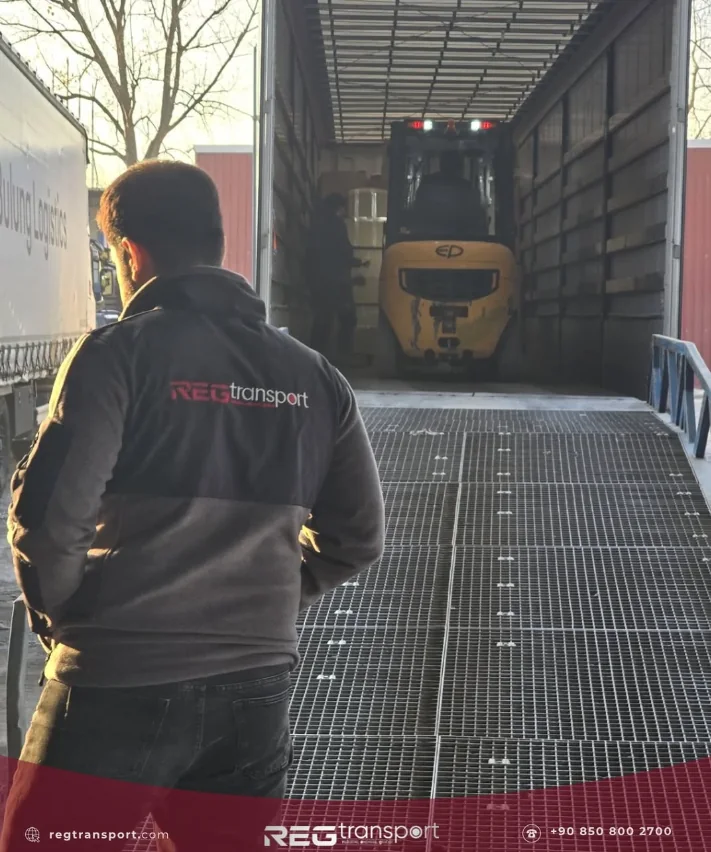
For Turkish sellers shipping to Amazon.co.uk FBA fulfilment centres, the groupage line is an ideal replenishment channel. Points to watch: Amazon's pallet standards (height limit, stretch wrap, FBA labels), appointment-based delivery (carrier appointment) and the DDP requirement — Amazon does not act as importer, so the seller needs UK VAT registration or an import representative. REG Transport handles FBA labelling and palletising at our London warehouse and organises the appointment delivery.
Worked Example: Weekly Textile Shipment from Bursa to London
A garment manufacturer in Bursa ships 6-8 pallets of product every week to its retail customer in London. The goods arrive at our Istanbul warehouse on Wednesday, the export declaration is closed on Thursday and the vehicle departs. Thanks to the origin statement on the invoice, UK customs duty is zero, and the buyer accounts for VAT through Postponed VAT Accounting without paying cash. The vehicle crosses at Dover on Monday, the pallets are separated at our London warehouse on Tuesday and delivered to the customer on Wednesday. The weekly cycle: 7 days, a fixed schedule and predictable costs.
Why REG Transport?
- Over 12 years of hands-on experience: thousands of completed shipments for families and businesses on the Turkey–UK and Turkey–Europe routes.
- Our own fleet and warehouses: depots in Istanbul, Gaziantep, London and Frankfurt; regular weekly departures that do not depend on third-party hauliers.
- Licensed customs operation: export declarations in Turkey and import declarations in the destination country are handled by our partner customs brokers; we prepare all documents on your behalf.
- One point of contact: the same account manager from survey to delivery, with updates at loading, border crossing and delivery.
- Transparent quotation: freight, packing, customs, insurance and delivery are itemised separately in writing; no surprise costs.
- Insurance: CMR included; full-value cover on declared value available.
Common Mistakes
- Shipping without the buyer's EORI number — the vehicle waits at the Channel.
- Leaving the HS code, origin statement or Incoterms off the invoice.
- Wooden pallets and crates without ISPM-15 marking — the cargo can be turned away.
- Ignoring UK labelling rules for food products (English-language ingredients, allergens, importer address).
- Under-declaring the value of goods — risk of penalties and retrospective assessment.
Frequently Asked Questions
I am exporting for the first time; I have a company but no exporter registration. What should I do?
Registration with the Exporters' Association takes a few days, and we guide you through it. If you prefer, we can handle your first shipments under the intermediary-exporter model.
Can I ship a single pallet?
Yes. Our groupage service carries a single pallet or a few boxes on the weekly departures.
Do I have to bring my cargo to the warehouse myself?
You can deliver to the warehouse or we can collect from your address. We collect from every province in Turkey.
Can you hold my cargo if the buyer has no warehouse in London?
Yes. Short- and medium-term storage at our London warehouse, followed by phased delivery, is available.
Who pays the taxes?
It depends on the delivery terms: the buyer under DAP, the seller under DDP. We can quote both options separately.
Get a Quote for Regular Shipments
Complete the quote form with your product details (HS code, number of pallets/boxes, dimensions and weight) and the collection and delivery addresses, and we will send a written quotation the same day covering freight, customs and optional DDP items. For service details, see our international commercial freight and customs clearance pages.